Platform comparison
| Platform | YES odds | NO odds | Fee | KYC | Settlement | |
|---|---|---|---|---|---|---|
Polymarket (via Polymarket Legit?) Pick polygram.ink (preferred broker) |
100% | 0% | 0% (USDC on-chain) | No-KYC up to $1,500 | USDC, auto via UMA oracle | Trade this market → |
Polymarket (direct) polymarket.com |
100% | 0% | 0% | Geo-blocked in US/UK/EU | USDC, on-chain | Trade this market → |
Kalshi kalshi.com |
— | — | Up to 7% per trade | US-only, KYC required | USD | Trade this market → |
Betfair Exchange betfair.com |
— | — | 2-5% commission | Full KYC from first trade | GBP / EUR | Trade this market → |
Manifold Markets manifold.markets |
— | — | Play-money (mana) | None — play-money | Mana (no cash-out) | Trade this market → |
Outcome probabilities
Current market-implied probability for each outcome, from the live order book.
| Outcome | Probability |
|---|---|
| 1+ | 100% |
| 2+ | 100% |
| 3+ | 100% |
| 4+ | 0% |
| 5+ | 0% |
| 6+ | 0% |
Market context
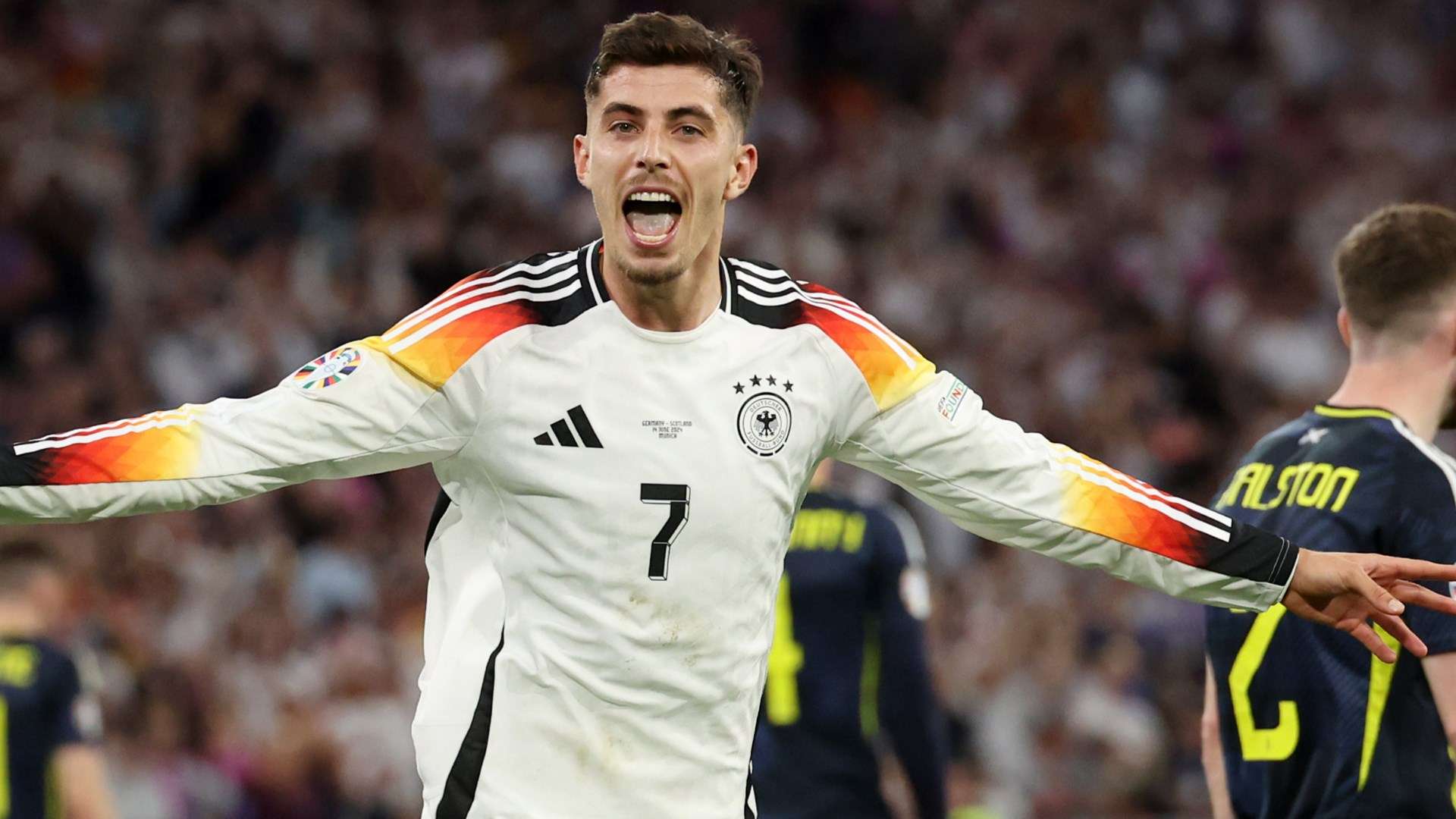
Kai Havertz has already scored in the 2026 FIFA World Cup, netting an equaliser against Paraguay and a chip against Curacao, yet the Polymarket contract for his goal tally currently prices at 0% YES. This stark divergence between on-chain pricing and real-world performance suggests the market is betting on a specific threshold he cannot reach, or perhaps that the settlement conditions have been misinterpreted by liquidity providers. Traders on Polygon, using USDC to back conditional tokens, are effectively ignoring his active participation and recent goals, creating a potential arbitrage opportunity if the market corrects to reflect his actual output.
Historically, markets that price a player at 0% despite them already scoring often resolve to a "No" because the listed threshold is set unrealistically high, such as requiring five or more goals in a single tournament. Havertz’s record shows direct involvement in five goals across eight qualifying matches, but World Cup finals typically yield fewer opportunities than qualifiers. Comparable cases from past tournaments show that even prolific scorers rarely exceed three goals in a single World Cup, meaning a 0% price likely implies the market expects the threshold to be four or more, which is statistically improbable for any outfield player.
The critical catalyst for traders is the official FIFA squad announcement and the specific goal threshold listed in the contract description, which remains ambiguous in current summaries. Traders must monitor Germany’s upcoming knockout fixtures and any injury updates, as Havertz’s availability hinges on the team’s progression. Recent coverage from BBC Sport confirms Havertz’s active role and disappointment after Germany’s exit, but the settlement window extends to August 2026, meaning the market may still be pricing in a cancellation or a threshold that exceeds his likely total. The on-chain mechanics will only resolve once the final scoresheet is published, so verifying the exact goal count required is essential before engaging further.
Methodology
We track World Cup: Kai Havertz Goals across the five venues with material prediction-market liquidity. The probability shown is the live Polymarket mid; the comparison rows summarise how each venue treats the underlying contract — fees, KYC thresholds, settlement currency, deposit options. The highlighted row marks the cheapest route into Polymarket's order book.
Resolution & payout
Polymarket-based markets settle through the UMA Optimistic Oracle on Polygon. A proposer submits the outcome, a two-hour challenge window opens, and unchallenged proposals finalise the resolution. Payouts settle automatically in USDC the moment the result is final — no bookmaker, no delay.
Kalshi-based markets settle in USD via the CFTC-regulated clearinghouse. Betfair Exchange settles in GBP/EUR net of commission. Manifold is play-money and does not pay out real funds.
FAQ
- How does resolution work?
- Through the UMA Optimistic Oracle on Polygon: a proposer submits the outcome, a two-hour challenge window opens, and USDC payouts settle automatically once the result is final.
- What's the difference between YES and NO shares?
- A YES share pays $1.00 if the event happens, $0 otherwise. A NO share pays $1.00 if the event doesn't happen. The market price between 0¢ and 100¢ is the implied probability.
- What does Polymarket cost to trade?
- Polymarket itself charges 0% — the only cost is the Polygon network fee, typically under $0.01 per transaction. Off-chain venues like Kalshi or Betfair charge 2-7% commission.
- Do I need to KYC for this market?
- On Polymarket directly, no — it's wallet-based. Intermediary brokers like Polymarket Legit? trigger KYC only above $1,500 of lifetime trading volume; under that you trade pseudonymously with a single wallet address.
- How reliable are the quoted odds?
- The YES/NO percentages are the live mid-prices of the Polymarket order book. On deep markets they move every few seconds; on thinner ones you'll see short plateaus.
%22%2F%3E%3Cpath%20d%3D%22M%206%2066%20A%2026%2026%200%200%201%2058%2066%22%20fill%3D%22%23E6B98D%22%20opacity%3D%220.9%22%2F%3E%3Ccircle%20cx%3D%2232%22%20cy%3D%2226%22%20r%3D%2222%22%20fill%3D%22%23F5CBA7%22%2F%3E%3Cpath%20d%3D%22M%2010%2026%20A%2022%2028%200%200%201%2054%2026%22%20fill%3D%22%2354a9eb%22%20opacity%3D%220.9%22%2F%3E%3C%2Fsvg%3E) and
and%22%2F%3E%3Cpath%20d%3D%22M%206%2066%20A%2026%2026%200%200%201%2058%2066%22%20fill%3D%22%23E6B98D%22%20opacity%3D%220.9%22%2F%3E%3Ccircle%20cx%3D%2232%22%20cy%3D%2226%22%20r%3D%2222%22%20fill%3D%22%23F5CBA7%22%2F%3E%3Crect%20x%3D%2210%22%20y%3D%224%22%20width%3D%2244%22%20height%3D%2214%22%20rx%3D%227%22%20fill%3D%22%2354a9eb%22%20opacity%3D%220.9%22%2F%3E%3Crect%20x%3D%228%22%20%20y%3D%2218%22%20width%3D%228%22%20%20height%3D%2218%22%20rx%3D%224%22%20fill%3D%22%2354a9eb%22%20opacity%3D%220.7%22%2F%3E%3Crect%20x%3D%2248%22%20y%3D%2218%22%20width%3D%228%22%20%20height%3D%2218%22%20rx%3D%224%22%20fill%3D%22%2354a9eb%22%20opacity%3D%220.7%22%2F%3E%3C%2Fsvg%3E)
Trade World Cup: Kai Havertz Goals on Polymarket Legit?
Live order book, 0% fees, USDC settlement in seconds.
Open live market →